Most homeowners think of the roof, siding, gutters and windows as separate items on separate repair lists. Water does not see them that way. To a raindrop, your exterior is one continuous path, and every step along it either guides the water safely away or gives it a chance to sneak inside. The team at Elevate Roofing and Exteriors looks at homes this way: as one connected system rather than a set of unrelated parts. So let’s follow a single raindrop from the sky to the soil and see where trouble tends to start.
Stop One: The Shingle Surface
The drop lands on your roof first. Shingles are designed to shed water downhill, each row overlapping the one below it. A healthy surface sends the drop straight toward the eave.
Where it goes wrong:
- Cracked, curled or missing shingles open a direct path to the layers beneath
- Heavy granule loss leaves the asphalt exposed to sun and wear
- Moss and debris hold moisture against the surface and slow the runoff
What to check from the ground: Look for uneven lines, dark streaks, bald spots or bits of shingle in the yard after a windy day.
Stop Two: The Valleys and Flashing
Where two roof slopes meet, water from a large area funnels into one narrow channel. The same happens around chimneys, skylights, vent pipes and wall intersections, where metal flashing bridges the gap between roof and structure.
This is where a large share of leaks begin. Flashing can lift, rust or pull away, and sealant dries out over time. A drop that would have slid harmlessly past now finds a seam.
What to check: Rust, gaps or cracked sealant around chimneys and vents, and any water stains on the ceiling directly below these spots.
Stop Three: The Eaves, Fascia and Soffit
At the roof edge, the drop leaves the shingles and meets the trim. Drip edge metal should direct it over the fascia and into the gutter. Without it, water can curl back under the shingles and soak the wood behind.
Warning signs:
- Peeling paint or soft spots on fascia boards
- Dark stains or sagging on soffits
- Birds, wasps or squirrels entering through damaged vents
Rot here spreads quietly, because it hides behind the gutter line until it is advanced.
Stop Four: The Gutters and Downspouts
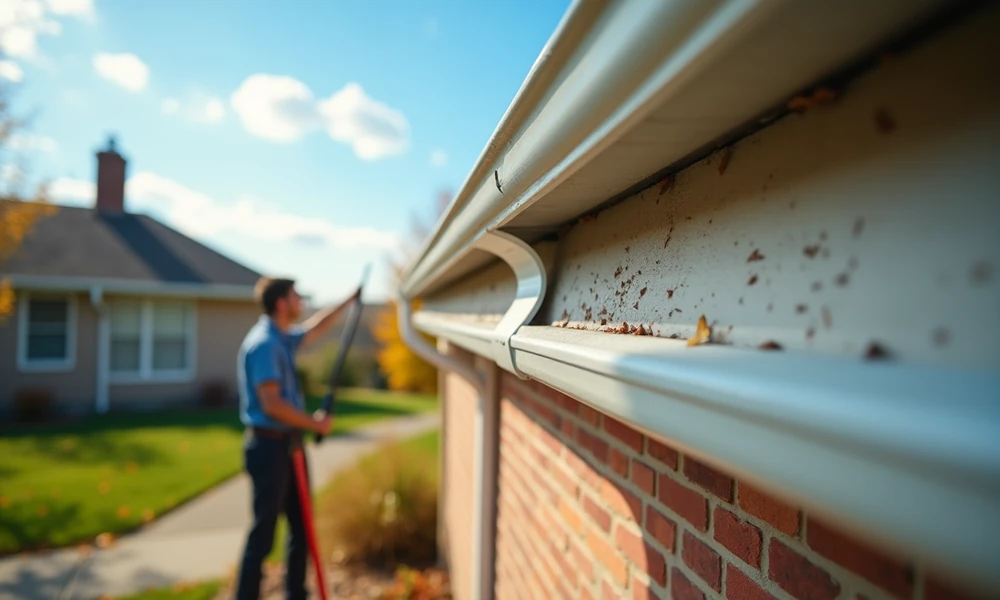
Now the drop joins thousands of others in the gutter. This stage is simple in concept and unforgiving in practice. A clogged or sagging gutter overflows, and the water that should have gone to the ground runs down the siding or pools at the foundation instead.
| Gutter problem | Likely result |
|---|---|
| Clogged with leaves | Overflow and stained siding |
| Pitched the wrong way | Standing water and faster corrosion |
| Loose or pulling away | Fascia damage and sagging |
| Short downspout outlet | Soggy soil beside the foundation |
| Undersized for the roof | Overflow in heavy storms |
Downspouts should discharge several feet away from the house, using extensions or splash blocks, so the water does not simply return to the foundation.
Stop Five: The Siding and Wall Surface
Some water never makes it to the gutter. Wind-driven rain strikes the walls directly, and siding is the first barrier. Its job is to shed most of the water and tolerate the rest, while a weather-resistant barrier behind it handles whatever slips through.
Where it goes wrong:
- Cracked, warped or loose boards and panels
- Gaps at corners, trim joints and penetrations such as faucets, vents and light fixtures
- Failed caulk where siding meets windows and doors
- Damage from trimmers, mowers or ladders that nobody noticed
What to check: Press gently on suspicious areas. Soft or spongy spots suggest moisture is already behind the surface.
Stop Six: The Windows and Doors
Openings are the most complicated parts of any wall. Water running down the siding meets the top of a window and must be diverted around it by flashing and trim. If that detail is missing or has failed, the drop finds its way into the frame.
Windows also affect comfort and energy bills. The U.S. Department of Energy provides helpful guidance on windows, doors and skylights, including how to evaluate performance and where air leaks commonly occur, which is worth reading before you decide between repair and replacement.
Warning signs:
- Stains or bubbling paint around frames
- Fogging between glass panes
- Drafts on windy days
- Doors that stick or leave daylight at the edges
Stop Seven: The Ground at the Foundation
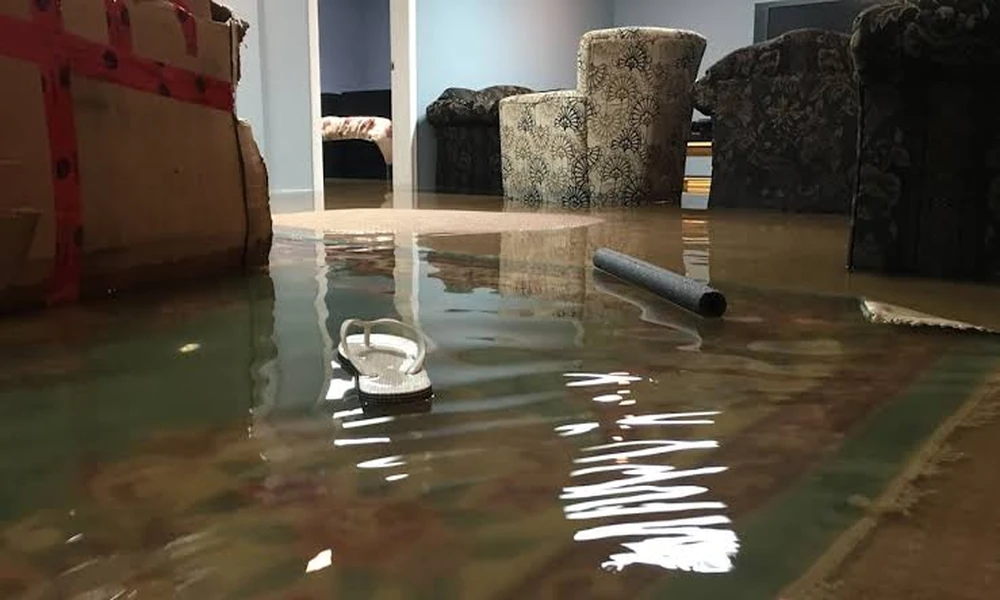
The drop finally reaches the soil. If the ground slopes away from the house, it keeps moving. If it slopes toward the house, the water collects against the foundation and can seep into basements and crawl spaces.
What to check: Soil should drop at least a few inches over the first several feet from the walls. Look for erosion channels, low spots and mulch or plants piled against the siding.
What the Raindrop Teaches Us
Following the path reveals a few patterns that apply to almost every home:
- Problems rarely stay in one place. A clogged gutter can rot the fascia, stain the siding and flood the foundation.
- Transitions are the weak points. Valleys, flashings, trim joints and window edges fail before open surfaces do.
- Small repairs protect big investments. Resealing a joint costs little compared with replacing damaged sheathing.
- Age shows up in the details. Caulk, paint, sealant and fasteners wear out well before the main materials do.
A Simple Exterior Walk Around
Twice a year, ideally in spring and fall, take a slow lap around your home with a notepad:
- Scan the roof with binoculars for lifted, cracked or missing shingles
- Check flashing at chimneys, vents and wall joints
- Look at gutters for debris, sagging and leaks, and note whether water is flowing freely during rain
- Inspect fascia, soffits and trim for peeling paint or soft spots
- Examine siding for gaps, cracks, stains or warping
- Test caulk around windows, doors and utility penetrations
- Check the grading near the foundation and the position of downspouts
- Photograph anything suspicious so you can compare over time
When to Bring in a Professional
Some jobs are straightforward, like cleaning gutters or touching up caulk. Others are better left to a trained crew, especially anything involving steep roofs, structural rot, widespread siding damage or window replacement. A thorough inspection looks at how all the pieces connect, which prevents the common mistake of repairing a symptom while the real cause continues.
- Will you inspect the whole exterior, or only the area I mentioned?
- Are the problems isolated, or do they point to a bigger issue?
- What materials and products do you recommend, and why?
- How will you protect landscaping, siding and windows during the work?
- What warranty covers the labor and the materials?
Final Thoughts
Your home’s exterior is a team effort, and water is the constant test. The roof, flashing, gutters, siding, windows and grading each handle a different stage of the journey, and the system is only as strong as its weakest link. Follow the raindrop, fix the small gaps while they are still small and look at the house as a connected whole. That mindset keeps the inside dry, the structure sound and your repair bills a lot lower.